Bas Cuvier
GoodNo recent rain
Temp21°C
Wind6 km/h
Humidity53%
Rain 48hdry
RockDry
ÎLE-DE-FRANCE · SANDSTONE · 12 AREAS
Fontainebleau is a forest south-east of Paris with thousands of sandstone boulders spread across dozens of areas. We forecast 12 of the most popular, from Bas Cuvier and Apremont near Barbizon to the Trois Pignons and L'Éléphant near Larchant. They dry at very different speeds after rain, so this page compares them side by side, updated every four hours, to help you find one that is actually dry.
All of Fontainebleau looks good today.
Updated Tue 6 Oct, 12:08 · refreshed every 4 hours
No recent rain
No recent rain
No recent rain
No recent rain
No recent rain
No recent rain
No recent rain
No recent rain
No recent rain
No recent rain
No recent rain
No recent rain
Each day is judged on the 10:00–16:00 climbing window. Tap a name for hourly detail.
| Area | Today | Wed | Thu | Fri | Sat | Sun | Mon | Tue |
|---|---|---|---|---|---|---|---|---|
| Bas Cuvier | Good | Poor | Poor | Caution | Poor | Caution | Caution | Good |
| Cuvier Rempart | Good | Poor | Caution | Caution | Poor | Caution | Caution | Good |
| Cuvier Merveille | Good | Poor | Poor | Caution | Poor | Caution | Caution | Good |
| Gorges d'Apremont | Good | Poor | Caution | Caution | Poor | Caution | Caution | Good |
| Apremont Bizons | Good | Poor | Poor | Caution | Poor | Caution | Caution | Good |
| Franchard Isatis | Good | Poor | Caution | Caution | Poor | Caution | Caution | Good |
| Franchard Cuisinière | Good | Poor | Poor | Caution | Poor | Caution | Caution | Good |
| Rocher Canon | Good | Poor | Poor | Caution | Poor | Caution | Caution | Good |
| Roche aux Sabots | Good | Poor | Caution | Caution | Poor | Caution | Caution | Good |
| 95.2 | Good | Poor | Caution | Caution | Poor | Caution | Caution | Good |
| Cul de Chien | Good | Poor | Caution | Caution | Poor | Caution | Caution | Good |
| L'Éléphant | Good | Poor | Caution | Caution | Poor | Caution | Caution | Good |
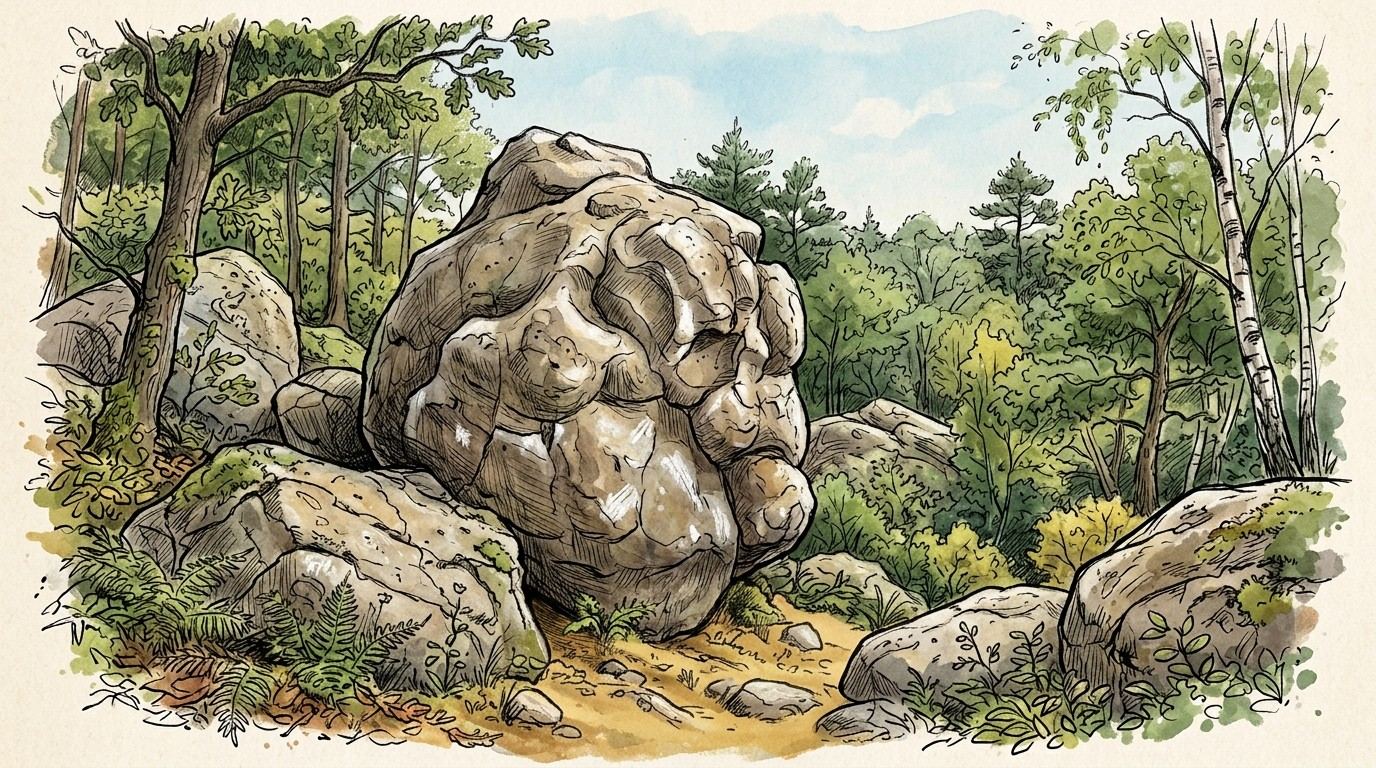
Fontainebleau sandstone soaks up water, and wet sandstone is much weaker than dry. Holds that are solid when dry can snap or crumble when damp, and the damage is permanent. The surface can look dry while the rock underneath is still wet, especially after a long wet spell, so a quick sunny spell after rain is not enough on its own.
Our model treats any measurable rain in the last 24 hours as a reason not to climb, so every area shows red for at least a day after rain, even in sunshine. After that, each area's verdict depends on how much sun and wind it gets and how shaded it is. If an area still shows amber or red, wait or pick a faster-drying area rather than testing the holds.
The areas on open, sandy ground dry fastest: 95.2, Cul de Chien and Roche aux Sabots in the Trois Pignons, L'Éléphant near Larchant, and Franchard Isatis. They get the sun and wind, and the sand underfoot drains quickly.
The areas under thick forest dry slowest: the lower boulders at Bas Cuvier, Cuvier Merveille, Rocher Canon and especially Apremont Bizons, which is north-facing and shaded. After a wet spell they can stay damp for a day or two longer than the open areas. At Apremont and Cuvier, the boulders higher on the hillside usually dry before those on the forest floor.
So after rain, the open Trois Pignons areas are often the first place to check, while the Cuvier and Apremont forests are still damp.
Across these 12 areas, our model run on 30 years of Météo-France climate data makes September the best month: about 29% green days and 70% green or amber. From April to September the green-or-amber share never drops below 64%. November to February are the hardest months, with short days, persistent humidity and a forest that stays damp; December has only about 13% green days. See the full table in Best Time to Visit Fontainebleau.
For friction, cool, dry and breezy days are best. Summer afternoons can be too hot and humid for good friction, especially on the open, sunny areas, so climb early or late in the day, or head for shaded areas such as Apremont Bizons.
Font sandstone is soft and easily worn, and the most popular problems are already polished. Wipe the sand off your shoes before every attempt, as sand on rubber grinds the rock away. Use a soft brush rather than a wire one, and never climb or brush when the rock is damp.
Fontainebleau is a public forest, and there is no fee or permit to boulder there. Stay on the paths, take your litter home and don't light fires. Parts of the forest can occasionally be closed, for example after storms, so check local signs when you arrive.
Check the area comparison at the top of this page. It shows today's verdict for 12 Font areas, with the reason for any amber or red, and updates every four hours.
Our forecast shows every area red for at least 24 hours after any measurable rain. After that, open, sandy areas such as 95.2 and Cul de Chien are usually first to dry in sun and wind, while forest areas such as Bas Cuvier and Apremont Bizons can take two days or more. Only climb when the rock is completely dry.
Sandstone loses much of its strength when it is wet. Holds can break or crumble under your weight, and the damage is permanent, so a problem can be changed for everyone who comes after you.
September, according to our model run on 30 years of climate data: about 70% of days are green or amber, with less rain than spring and less heat than July and August.
Often in the afternoon. Sandstone friction suffers in heat and humidity, so climb early or late in the day, or choose shaded forest areas such as Apremont Bizons.
Yes. Fontainebleau is a public forest and bouldering is free, with no permit needed. Parts of the forest can occasionally be closed, for example after storms, so check local signs when you arrive.