El Arrastradero
CautionShould be dry
Temp9°C
Wind7 km/h
Humidity54%
Rain 48h0.4mm
RockDry
TERUEL, SPAIN · SANDSTONE · 5 SECTORS
Albarracín, in the mountains of Teruel in eastern Spain, is one of Europe's great sandstone bouldering areas: red, Font-like boulders scattered through the pine forest of the Pinares de Rodeno at about 1,100–1,200m. Like Font, the sandstone is weak when wet, so the real question is whether it has dried since the last rain. We forecast five sectors and compare them side by side, updated every four hours.
All of Albarracín is marginal today (should be dry).
Updated Mon 23 Nov, 04:33 · refreshed every 4 hours
Should be dry
Should be dry
Should be dry
Should be dry
Should be dry
Each day is judged on the 10:00–16:00 climbing window. Tap a name for hourly detail.
| Sector | Today | Tue | Wed | Thu | Fri | Sat | Sun | Mon |
|---|---|---|---|---|---|---|---|---|
| El Arrastradero | Caution | Poor | Caution | Caution | Caution | Good | Good | Good |
| Sol y Sombra | Caution | Poor | Caution | Caution | Caution | Good | Good | Good |
| Tierra Media | Caution | Poor | Caution | Caution | Caution | Good | Good | Good |
| Masico Pino | Caution | Poor | Poor | Caution | Caution | Good | Good | Good |
| Las Espadas | Caution | Poor | Poor | Caution | Caution | Good | Good | Good |
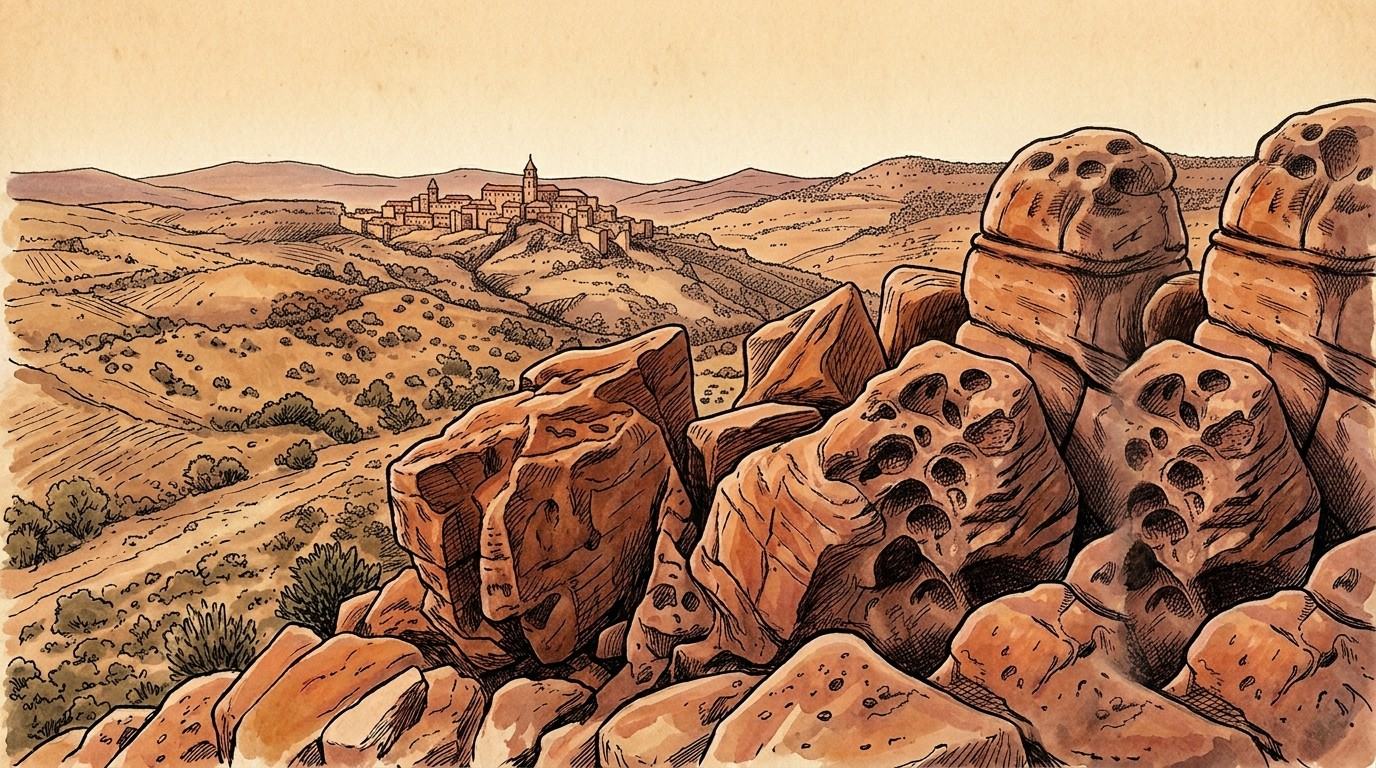
Albarracín's red sandstone soaks up water and is much weaker when it's wet: holds can snap or crumble, and the damage is permanent. The surface can look dry while the rock underneath is still damp, so a sunny morning after rain isn't enough on its own. Never climb on frozen rock either: water inside the sandstone expands as it freezes.
Our forecast marks a day red when rain is forecast and while the rock is still wet, then keeps the boulders amber until about three days after rain while the rock dries inside. The open sectors dry first: El Arrastradero is on an open hillside and Sol y Sombra faces south. Tierra Media, under the pines, usually needs an extra day, and the deep forest at Masico Pino and the north-facing boulders at Las Espadas are the slowest.
Winter and early spring. In our model run on 30 simulated years based on Spanish weather service climate normals, February is the best month at 63% climbable days, then March (59%), January and September (both 54%). April to June and October are the wettest months, at 34–45%, and July and August drop to 10–13%, because the afternoons are too warm for good friction on sandstone. Our forecast marks a day amber when it passes 27°C (80°F).
Winter mornings are very cold: they can reach −8°C or colder in January and February. Wait for the sun to warm the rock, start on the south-facing boulders at Sol y Sombra, and save Las Espadas for milder days. See the full table in Best Time to Visit Albarracín.
Albarracín's boulders are in the Pinares de Rodeno Protected Landscape, and climbing there is regulated by an order of the Government of Aragón from 2022 (Orden AGM/456/2022). In short:
The protected area's director can also limit or ban activities temporarily, so obey any signs on site.
Check the sector comparison at the top of this page. It shows today's verdict for five sectors, from El Arrastradero and Sol y Sombra to Tierra Media, Masico Pino and Las Espadas, with the reason for any amber or red, and updates every four hours.
Our forecast shows the boulders red on rainy days and while they are still wet, then amber until about three days after rain while the rock dries inside. Open, south-facing sectors dry first; forest sectors like Masico Pino can take a day or two longer. Never climb damp sandstone: the damage is permanent.
February is the best month in our 30-year model (63% climbable days), then March (59%), January and September (54%). Spring and October are wetter, and July and August are too warm for good friction.
Yes, but marking holds with chalk is banned under the 2022 regulations for the Pinares de Rodeno. Use as little chalk as you can and brush it off when you've finished.
No. Camping is banned in the Pinares de Rodeno Protected Landscape, and you may only park in the signed car parks. Stay in the town or at a campsite.