The Lofoten Islands, off the coast of northern Norway, are one of the most beautiful places in the world to climb: steep granite peaks and pillars rising straight out of the sea, above fishing villages and white beaches, well north of the Arctic Circle. The climbing is mostly trad, from single pitches by the road to long routes up the famous Presten pillar above Henningsvær. It's on the edge of the Atlantic, so the weather can turn fast. We ran 30 years of weather through our drying model to find out when the rock is most often dry and climbable.
We took 30 years (1996–2025) of daily rain and temperature from MET Norway's seNorge grid, a 1 km map of Norway's weather built from its stations, at Presten, and daily humidity from MET Norway's weather station on the lighthouse island of Skrova, 18 km away in the Vestfjord. Then we ran every day through the climbingforecast drying model, with the same granite rules as our live forecasts. Each day is scored for an afternoon session, and again at the day's low for a cool-hours session.
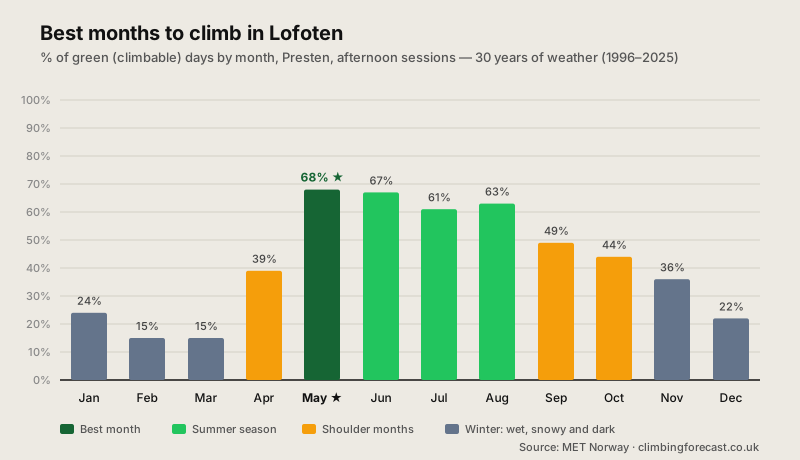
When is the best time to climb in Lofoten?
Early summer: May and June are best. Presten scores 68% green afternoons in May and 67% in June, with August (63%) and July (61%) close behind. The best fortnight of the year is the second half of May, at 72%. May reached 70% green in 16 of the 30 years, and June in 14.
Why early summer? It's the driest part of the year. June and July get about 66 mm of rain each, on about 10 days a month, while September gets 162 mm and November and December about 200 mm. Lofoten's wet season runs from September to March, when Atlantic storms come through one after another.
It's cool, even in summer. May afternoons average about 9°C (49°F) at sea level, and July about 16°C (61°F). The air is damp, and the sea wind can make it feel colder on a long route, but heat is never a problem. Bring warm layers in every month.
Lofoten climbing conditions month by month
| Month | Afternoon | Morning | High | Rain | Rain Days |
|---|---|---|---|---|---|
| Jan | 24% | 23% | 2°C / 36°F | 177 mm | 17.8 |
| Feb | 15% | 13% | 2°C / 35°F | 159 mm | 16.6 |
| Mar | 15% | 14% | 3°C / 37°F | 151 mm | 17.5 |
| Apr | 39% | 35% | 5°C / 41°F | 100 mm | 14.2 |
| May ★ | 68% | 62% | 9°C / 49°F | 75 mm | 12.8 |
| Jun | 67% | 64% | 13°C / 55°F | 66 mm | 10.7 |
| Jul | 61% | 59% | 16°C / 61°F | 66 mm | 9.9 |
| Aug | 63% | 60% | 16°C / 60°F | 98 mm | 13.4 |
| Sep | 49% | 43% | 12°C / 54°F | 162 mm | 16.1 |
| Oct | 44% | 40% | 8°C / 47°F | 179 mm | 18.4 |
| Nov | 36% | 33% | 5°C / 41°F | 202 mm | 18.5 |
| Dec | 22% | 20% | 3°C / 38°F | 199 mm | 18.2 |
Presten (60 m, at the foot of the west face), 30 years (1996–2025) of daily rain and temperature from MET Norway's seNorge 1 km grid, with humidity from MET Norway's station on Skrova. Afternoon and Morning are the % of green (climbable) days, scored at the day's high and at the day's low. High is the average daily high, Rain the monthly average (rain and melted snow), and Rain Days the days with 1 mm or more. Factors in rain, drying time, wind, humidity, snow and heat. Cold, dry days count as green. Source: MET Norway.
Climbing under the midnight sun
From late May to mid-July, the sun never sets. Lofoten is about 180 km north of the Arctic Circle, so for the best part of two months you can climb at any hour. That changes how you deal with the weather: if a shower comes through in the afternoon, the rock can dry by the evening, and you can climb through the light night. Many walls get the sun late in the day, and evening and night-time starts are common.
Mornings and afternoons score about the same. In our replay, the day's low scores only a few points below the day's high. In a place this cool and damp, the time of day matters less than the weather: watch the forecast, and go when the rock is dry, whatever the clock says.
Autumn and winter
From September, the wet season starts. September scores 49% and October 44%, with 160–180 mm of rain a month on 16 to 18 days, and the nights get dark again. A settled spell in early September can still give good climbing on the quick-drying, sunny walls.
Winter is for skiing, not rock. From November to March, scores fall to 15–36%. It rains or snows on 17 to 19 days a month, and from early December to early January the sun doesn't rise at all. The winter numbers aren't zero because the model counts cold, dry days as green, but in practice the short days and the snow make rock climbing a rare treat.
Climbing in Lofoten: what to expect
Granite by the sea. Lofoten's climbing is mostly trad on solid granite, with cracks, corners and slabs, from short routes by the road to long climbs on peaks that rise straight from the sea. Presten, a 400 m granite pillar above the sea near Henningsvær, is the most famous: its west face holds Vestpillaren, Lofoten's best-known long route. Bring a full rack, and be ready for wet streaks and lichen away from the popular lines.
Weather and wind. Lofoten weather can change quickly, and showers can form even on a sunny day. The wind off the sea can be cold on exposed routes, so carry a windproof and warm layers. The popular routes can get busy in the summer holidays; Henningsvær, a fishing village built on small islands, is the usual base, and the Rockfax guide Lofoten Rock is sold there.
Best: May and June
68% and 67% green afternoons. The second half of May is the best fortnight, at 72%.
Midnight Sun
From late May to mid-July the sun never sets. If it rains in the afternoon, climb in the evening.
Wet From September
160–200 mm of rain a month from September to December, and dark, snowy winters.
How we calculated this
There's no long weather record at Presten itself, so we used MET Norway's seNorge grid, which maps each day's rain and temperature across Norway on a 1 km grid from its weather stations, at the square that takes in Presten. The grid has no humidity, and in a place as damp as Lofoten, humidity matters: our model marks granite amber when the air is very humid, because friction suffers and the rock stays damp. So we took the daily humidity measured at MET Norway's station on the lighthouse island of Skrova, 18 km east of Presten, and adjusted it to the temperature at the crag. Using humidity from MET Norway's station at Leknes airport, 25 km to the west, instead gives results 2–7 points better from May to October. Wind is set to a steady breeze; using the lighthouse's own wind, which is much windier than the foot of Presten, takes off about 7–10 points.
Every day is rated on recent rain, drying time, wind, humidity, snow and heat, at the day's high (afternoon) and low (morning). The model reads the air temperature, not the rock, and it doesn't know which walls are in the sun at midnight, so use the numbers to choose your month and the live Presten forecast to choose your day.
Data retrieved 8 October 2026. Source: MET Norway, seNorge_2018 daily grid (version 23.09) and station observations from Skrova fyr (85380) and Leknes lufthavn (85560), licensed under CC BY 4.0. Climbing background from SummitPost, Mountain Project and Explore-Share. For more Scandinavian granite, see our Bohuslän and Hægefjell guides, and for summer granite in Canada, Squamish.
Good luck and enjoy the climbing!