Rifle Mountain Park, in western Colorado, is one of the best limestone sport climbing areas in North America, especially at 5.12 and above. Steep, polished walls of Leadville Limestone line the narrow canyon of East Rifle Creek, about 20 km (13 miles) north of the town of Rifle, with around 500 routes, most of them a few minutes from the road. It's where Matty Hong climbed Bad Girls Club (5.14d) in 2011, and where Margo Hayes made its first female ascent in 2016, a year before she climbed Biographie at Céüse. Rifle is known as a summer crag, but its summer afternoons are hot, and its spring is wet. We used 30 years of weather data to find out when to go, and what time of day to climb.
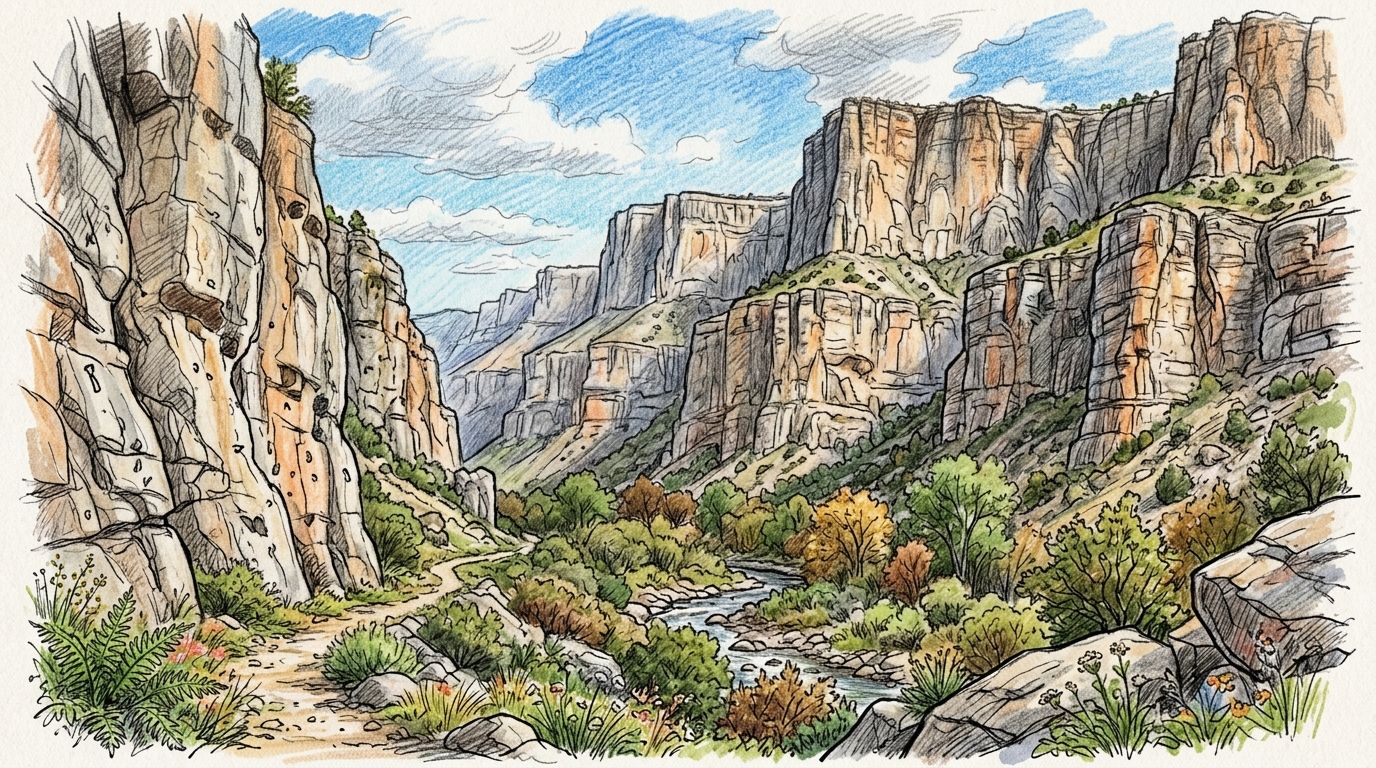
We replayed 30 years (1996–2025) of real daily observations through the climbingforecast drying model. The data comes from public weather stations either side of the canyon: NOAA's stations at Rifle Garfield County Airport and in the town of Rifle (about 1,680 m, 5,500 ft), and the NRCS SNOTEL station at Burro Mountain (2,865 m, 9,400 ft), on the plateau above the canyon. The walls sit between the two, at 2,110 to 2,195 m (6,900 to 7,200 ft), so we adjusted the temperature and rain to each wall's height. We ran it for four of the main walls, the Wasteland, the Anti-Phil Wall, the Arsenal and the Project Wall. They came out within a few points of each other every month, so the numbers below are for the canyon as a whole. And because Rifle's summer is all about timing, we scored every day twice: once for an early-morning session, and once for an afternoon session.
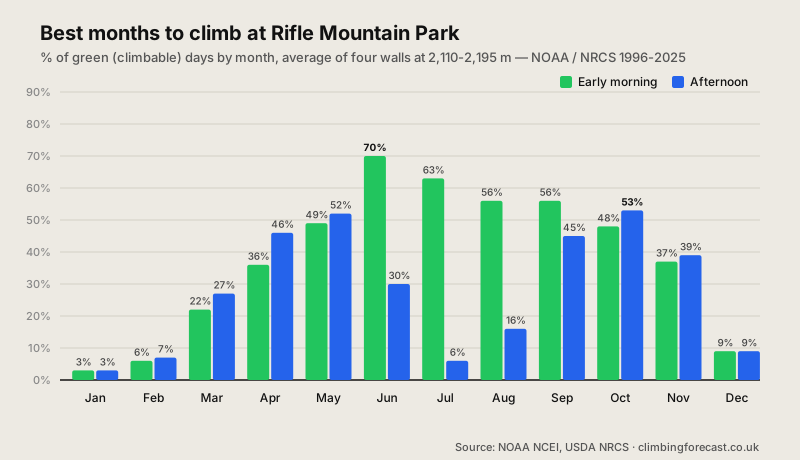
When is the best time to climb at Rifle?
For early starts, June and July. Scored for an early-morning session, June is the best month of the year at 70% green days, then July at 63%, and August and September at 56%. June is the driest month at Rifle, and an early start avoids most of the heat. June reached 70% or more in 15 of the 30 years.
For afternoons, October and May. Scored for an afternoon session, October (53%) and May (52%) are the best months, then April (46%) and September (45%). The summer months collapse in the afternoon: June drops to 30%, July to 6% and August to 16%, because it's too hot.
The best all-round choice is late September and October. September scores 56% in the morning and 45% in the afternoon, and October 48% and 53%, so you can climb at any time of day. May looks as good on paper, but the seeps are still running in spring (see below), so May is better than it looks for dry walls such as the Arsenal, and worse for seepy ones such as the Wasteland.
Winter is snow season. From December to February, the canyon is under snow on almost every day, and scores 3–9%. In midwinter, Rifle is an ice-climbing venue.
Rifle climbing conditions month by month
| Month | Morning | Afternoon | High |
|---|---|---|---|
| Jan | 3% | 3% | 2°C / 35°F |
| Feb | 6% | 7% | 4°C / 39°F |
| Mar | 22% | 27% | 10°C / 50°F |
| Apr | 36% | 46% | 14°C / 58°F |
| May | 49% | 52% | 20°C / 68°F |
| Jun | 70% | 30% | 27°C / 80°F |
| Jul | 63% | 6% | 30°C / 85°F |
| Aug | 56% | 16% | 28°C / 82°F |
| Sep | 56% | 45% | 23°C / 74°F |
| Oct | 48% | 53% | 16°C / 60°F |
| Nov | 37% | 39% | 8°C / 46°F |
| Dec | 9% | 9% | 2°C / 35°F |
Average of the Wasteland, Anti-Phil Wall, Arsenal and Project Wall (2,110–2,195 m / 6,900–7,200 ft), 30 years (1996–2025) of real daily observations from NOAA's Rifle stations and the NRCS Burro Mountain SNOTEL station, adjusted to each wall's height. Morning and Afternoon are the % of green (climbable) days, scored at the day's low and at the day's high. High is the average daily high at the Wasteland. Factors in rain, drying time, wind, humidity, snow and heat. Cold, dry days count as green. Doesn't include seepage from snowmelt. Source: NOAA NCEI, USDA NRCS.
Is Rifle too hot in summer? In the afternoon
At the height of the walls, July highs average about 30°C (85°F), and August's about 28°C (82°F). A high of 27°C (81°F) or more, the point where our model starts to flag the heat, happens on about 16 days in June, 26 in July and 20 in August. The hottest day in our record, 9 July 2021, reached about 36°C (97°F). That's what drags summer afternoons down to 6–30% green.
Mornings are a different story. July nights average about 12°C (53°F), and scored at the day's low, June scores 70%, July 63% and August 56%. Rifle's canyon also helps in a way our model can't see: it runs north to south, with walls facing east and west, so one side of the canyon is always in the shade. Climb the west-facing walls, such as the Wasteland and the Project Wall, in the morning shade, and the east-facing ones, such as the Anti-Phil Wall, in the afternoon. The cool air off the creek helps too. On a hot afternoon, the shaded walls are still climbable, but the friction isn't at its best.
When do the seeps dry out at Rifle? Usually in June
Rifle's seeps are fed by the snow on the White River Plateau above the canyon. At the NRCS Burro Mountain station on the plateau, at 2,865 m (9,400 ft), the snow usually builds to its peak in early April and melts out around 19 May. In 4 of the 30 years (1997, 1998, 2011 and 2019) it lasted into June, as late as 23 June in 2019. Water keeps draining through the limestone for a while after that, and local climbers say the Wasteland and the left side of the Project Wall often don't dry out until June. Steep caves such as the Arsenal shed the water better.
Our model rates seepage after rain, but not from snowmelt, so its April and May numbers are better than the reality on the seepy walls. After a big winter on the plateau, plan a Rifle trip for late June or later. The snow at the crag itself goes much sooner: in our replay, it usually melts out in mid-April.
How much does it rain at Rifle? A little, all year round
The data averages about 490 mm (19.4 in) of rain and snow a year at the height of the walls, on about 100 days with 1 mm or more. It's spread fairly evenly through the year: spring brings 29%, autumn 27%, winter 26% and summer only 18%. June is the driest month, at about 24 mm (0.9 in) on five wet days.
From July, the North American monsoon brings moisture up from the south, and afternoon thunderstorms build over the mountains. August gets about 38 mm (1.5 in) on eight wet days. Storms are why August mornings score lower than June's: after an afternoon storm, the rock is often still wet the next morning. Local climbers also warn that a long monsoon storm, lasting a day or more, can get routes seeping again. Keep an eye on the sky in the afternoon, and check the forecast each morning.
Can you climb at Rifle in October and November? October, yes
October is the best month of the year for an afternoon session, at 53%. Highs average about 16°C (60°F), ideal for hard routes, but nights average about 0°C (32°F), with frost on about 17 nights, so mornings are cold and slow, and the morning score drops to 48%. The best Octobers, such as 2003 and 1999, scored 85% or more in the afternoon.
November is a gamble, at 37–39%. Highs average about 8°C (46°F), and snow plays a part on about 12 days. In a dry, mild autumn, such as 2020 or 2025, November can be very good, but in others, such as 2000 and 2022, there was almost nothing to climb. Our model counts cold, dry days as green, so the autumn numbers are for climbers happy to climb in the cold.
Early Summer Mornings
June mornings lead at 70% green days, then July at 63%. Start early and follow the shade.
Spring Seeps
The snow on the plateau melts around 19 May, and the seepy walls often stay wet until June.
Hot Afternoons
Summer afternoons drop to 6–30% green. For all-day climbing, go in late September or October.
How we calculated this
We ran 30 years (1996–2025) of daily weather from NOAA's stations at Rifle Garfield County Airport and in the town of Rifle, below the canyon, and the NRCS SNOTEL station at Burro Mountain, above it, through the drying model behind the live Wasteland forecast. We adjusted the temperature and rain to each wall's height between the two, took the humidity and wind from the airport, and tracked the snow building up and melting from day to day. Each day is rated on recent rain, drying time, wind, humidity, snow and heat, once at the day's low, for an early-morning session, and once at the day's high, for an afternoon session. Cold, dry days count as green.
Data retrieved 2 October 2026 from NOAA NCEI's GHCN-Daily dataset (stations USW00003016, USC00057033, USC00057031 and USC00053359), the USDA NRCS SNOTEL network (Burro Mountain) and the Iowa Environmental Mesonet (Rifle airport). Source: NOAA National Centers for Environmental Information; USDA Natural Resources Conservation Service.
It won't replace checking the forecast the week you go, but it's an honest answer to "when should I book?". Before you go, check the live Wasteland, Anti-Phil Wall, Arsenal and Project Wall forecasts. For more summer limestone in the American West, see our Ten Sleep article, and for more US sport climbing, our Red River Gorge article.
Good luck and enjoy the climbing!