Squamish is North America's premier granite destination outside Yosemite — thousands of trad pitches on The Chief, world-class bouldering under the Grand Wall, and enough sport climbing at Cheakamus and Murrin to fill any wet-weather backup plan. But the Sea-to-Sky sits under the wettest weather in Canada, and the climbing window is narrower than the season looks. When should you actually book?
We ran our Squamish-specific climbingforecast.co.uk model with 30 years of Environment and Climate Change Canada climate normals (1991–2020, Squamish Airport station). Here's what the data says.
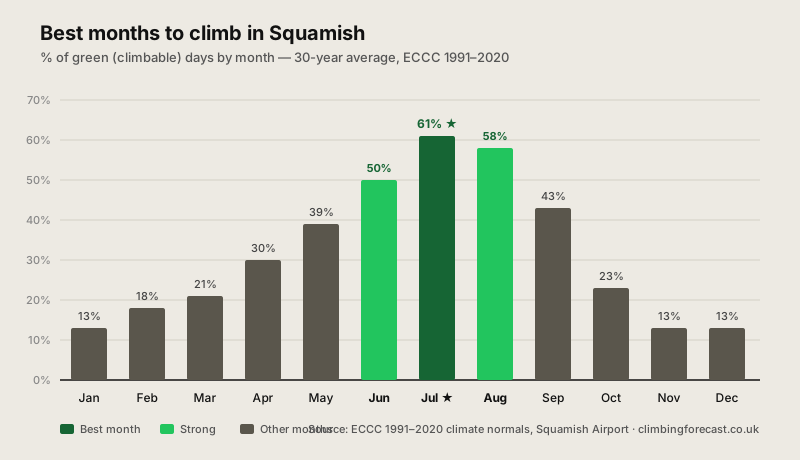
When is the best time to climb in Squamish?
The sweet spot: July. 61% chance of a climbable day, and by early July the Pacific wet season is comfortably closed. Cool mornings, warm dry afternoons, and enough consecutive dry days that even the seep on Grand Wall pitches 2–3 clears. August (58%) sits right behind it and stays hotter later into the day. June (50%) is the increasingly popular shoulder — a little wetter, noticeably cooler, and the go-to for anyone chasing the Chief in shade rather than sun.
When to avoid: November through February. The chart above tells the whole story — 13–18% climbable days as Pacific frontal systems park over the Coast Range and dump rain on Howe Sound for days at a time. West-facing granite that already seeps for 3+ days after real rain doesn't have time to recover between fronts. Locals climb the Smoke Bluffs and Cheakamus Canyon between weather systems in winter, but it isn't a trip.
Month-by-month conditions
| Month | Green Days | Non-Green Days | % Green |
|---|---|---|---|
| Jan | 4.0 | 27.0 | 13% |
| Feb | 5.1 | 23.2 | 18% |
| Mar | 6.5 | 24.5 | 21% |
| Apr | 9.0 | 21.0 | 30% |
| May | 12.1 | 18.9 | 39% |
| Jun | 15.0 | 15.0 | 50% |
| Jul ★ | 18.9 | 12.1 | 61% |
| Aug | 18.0 | 13.0 | 58% |
| Sep | 12.9 | 17.1 | 43% |
| Oct | 7.1 | 23.9 | 23% |
| Nov | 3.9 | 26.1 | 13% |
| Dec | 4.0 | 27.0 | 13% |
Based on 30 simulated years using Environment and Climate Change Canada 1991–2020 climate normals at the Squamish Airport station, averaged across the ten Squamish sectors in our forecast. Green Days are days-in-month × % Green from the underlying model; Non-Green Days pools our AMBER (marginal — drying or borderline humidity) and RED (wet, seeping, or over-humid) statuses. Factors in rain, wind, humidity, and per-sector aspect and seepage — the drying model runs separately for each of the ten sectors before averaging.
Should you climb Squamish in summer or winter?
Summer works — but plan around the heat, not against it. Unlike sandstone destinations (Fontainebleau, Rocklands, Albarracín) where hot rock kills friction and closes the sending window, Squamish granite is high-friction rock that handles warm days fine. The constraint in July and August is comfort, not the rock: daytime highs push into the high 20s and low 30s, so people climb early on the Chief and the boulders, swim in the Cheakamus River or Alice Lake in the afternoon, and come back out in the evening. North-facing walls (Chief North Walls, parts of Murrin Park) and the shaded forest boulders stay cool all day and become the go-to for hard sending sessions. Late June is the sweet spot for anyone who wants full climbable days without dodging the sun.
Winter is genuinely not a trip. The Sea-to-Sky corridor is one of the wettest places in Canada — Squamish Airport records nearly 2,400mm of annual precipitation, most of it between October and April. November through February return 13–18% climbable days, and even those days often follow storm systems that have soaked west-facing granite for a week. The Smoke Bluffs and Cheakamus Canyon give occasional dry windows between fronts, but coming from overseas for that is a bad bet. Save winter for Skaha, Bishop, or somewhere else the sun goes.
Which sector for which conditions?
The Squamish sectors sit in one weather system but their drying behaviour varies more than the map suggests:
- The Smoke Bluffs — south-facing, open, low-altitude, frequent winds. Fastest-drying sector; some walls (Burgers and Fries, Penny Lane) come back within hours of a shower. The natural first-day and rebound-day destination.
- The Chief (Grand Wall) — steep west-facing, but pitches 2–3 traverse a notorious seep line that needs 3+ dry days after real rain. The upper pitches recover quickly once seepage clears. This is the marquee route — plan for it, don't wing it.
- The Chief (Apron) — low-angle west-facing slabs. Open faces dry fast but water-streaks persist for days after sustained rain, and wet slab is dangerously slick even where the rock isn't damaged.
- The Chief (North Walls) — north-facing, slowest-drying area on the Chief. Shortens the usable spring and fall season significantly; expect "munge" in the holds days after everyone else is climbing.
- Grand Wall Boulders and Cacodemon Boulders — the world-class bouldering under the Chief. Partial forest canopy slows drying; treat three dry days as the minimum and watch dewpoint as closely as the rain forecast — Squamish granite friction is very humidity-sensitive.
- Shannon Falls / Pet Wall — waterfall spray dominates this wall even on rain-free days. Most lines suffer; only a handful of wind-sheltered pitches stay consistently dry.
- Crumpit Woods — heavily forested in-town bouldering and sport. Trees keep it cool in summer but dramatically slow drying compared with the open Smoke Bluffs.
- Murrin Park — sport climbing just south of town. Several steep, sheltered walls stay climbable through mixed weather. A useful fallback when the Chief is seeping.
- Cheakamus Canyon — sport climbing 20 minutes north of town in a partial rain shadow. Dries within hours thanks to afternoon sun and river wind; the Main Event roofs are steep enough to climb in active light rain. The best wet-weather alternative to the Chief.
The forecast at climbingforecast.co.uk runs the drying model per-sector, so once you're on the ground you can see which one is actually in condition rather than guessing. Our fuller destination write-up lives at the Squamish climbing guide if you want logistics — flights, guidebook, gear, where to eat — as well as when.
Peak Potential
July leads the practical climbing season at 61% green days. August (58%) is the hotter shoulder; late June (50%) is the increasingly popular cooler shoulder for anyone chasing the Chief in shade rather than sun.
Winter Shutdown
November through February drop to 13–18% climbable days as Pacific frontal systems park over the Coast Range. West-facing granite doesn't have time to recover between storms. Coming from overseas for that is a bad bet.
Shoulder Season
May and September sit at 39% and 43% green — enough for a trip if you're flexible, especially with Cheakamus Canyon and the Smoke Bluffs as fast-recovering fallbacks. Bring more layers than you think and expect to shuffle sectors between fronts.
How we calculated this
We pulled Environment and Climate Change Canada's 1991–2020 climate normals for the Squamish Airport station — monthly averages for temperature, rain frequency, humidity and wind. From those normals we drew 30 synthetic years of daily weather and ran every simulated day through our drying model for each of the ten Squamish sectors in our forecast. Each day gets a GREEN, AMBER or RED status based on rain, drying time, wind, and each sector's aspect, altitude and seepage grade — so the North Walls score differently from the Smoke Bluffs even under identical weather. The chart above is the 30-year average % GREEN across those ten sector-years.
The same methodology powers our Rocklands, Albarracín, Fontainebleau and Peak District data pieces. It's not a substitute for checking the actual forecast the week you're going — but it's the honest answer to "when should I book?"
Good luck and enjoy the climbing!