Erto
CautionDrying — 20h since rain
Temp4°C
Wind4 km/h
Humidity53%
Rain 48h0.5mm
Rock51%
ITALY · DOLOMITE · 11 AREAS
The Dolomites in north-eastern Italy are Europe's great limestone playground: huge walls and towers of pale dolomite, from the Sella and the Tre Cime to the Marmolada, the Civetta and the Pale di San Martino, with valley sport crags below. We forecast 11 areas, from big south faces to cold north walls, and compare them side by side, updated every four hours. In the mountains the forecast decides more than ever: where to go, and how early to start.
Caution at Erto (drying — 20h since rain). Poor at Piz Ciavazes, Frea, the Sassolungo north face, Cinque Torri, the Cima Grande and the Vajolet Towers (no recent rain). Poor at Landro and the Marmolada south face (should be dry). Poor at the Civetta north-west face and Cima della Madonna (drying — 20h since rain).
Updated Mon 23 Nov, 04:33 · refreshed every 4 hours
Drying — 20h since rain
No recent rain
No recent rain
No recent rain
No recent rain
No recent rain
Should be dry
Should be dry
No recent rain
Drying — 20h since rain
Drying — 20h since rain
Each day is judged on the 10:00–16:00 climbing window. Tap a name for hourly detail.
| Area | Today | Tue | Wed | Thu | Fri | Sat | Sun | Mon |
|---|---|---|---|---|---|---|---|---|
| Piz Ciavazes (Sella) | Good | Good | Poor | Poor | Caution | Good | Good | Poor |
| Frea (Passo Gardena) | Good | Good | Poor | Poor | Caution | Good | Good | Good |
| Sassolungo (Langkofel) — North Face | Good | Good | Poor | Poor | Caution | Good | Good | Poor |
| Cinque Torri | Good | Good | Poor | Poor | Caution | Good | Good | Poor |
| Tre Cime di Lavaredo (Drei Zinnen) — Cima Grande | Good | Good | Poor | Poor | Caution | Good | Good | Poor |
| Landro | Good | Good | Poor | Poor | Caution | Good | Good | Poor |
| Marmolada — South Face | Good | Good | Poor | Poor | Caution | Good | Good | Poor |
| Vajolet Towers (Rosengarten) | Good | Good | Poor | Poor | Caution | Good | Good | Poor |
| Civetta — North-West Face | Caution | Good | Poor | Poor | Caution | Good | Good | Poor |
| Cima della Madonna (Pale di San Martino) | Caution | Poor | Poor | Poor | Caution | Good | Good | Poor |
| Erto | Caution | Poor | Poor | Poor | Caution | Good | Good | Poor |
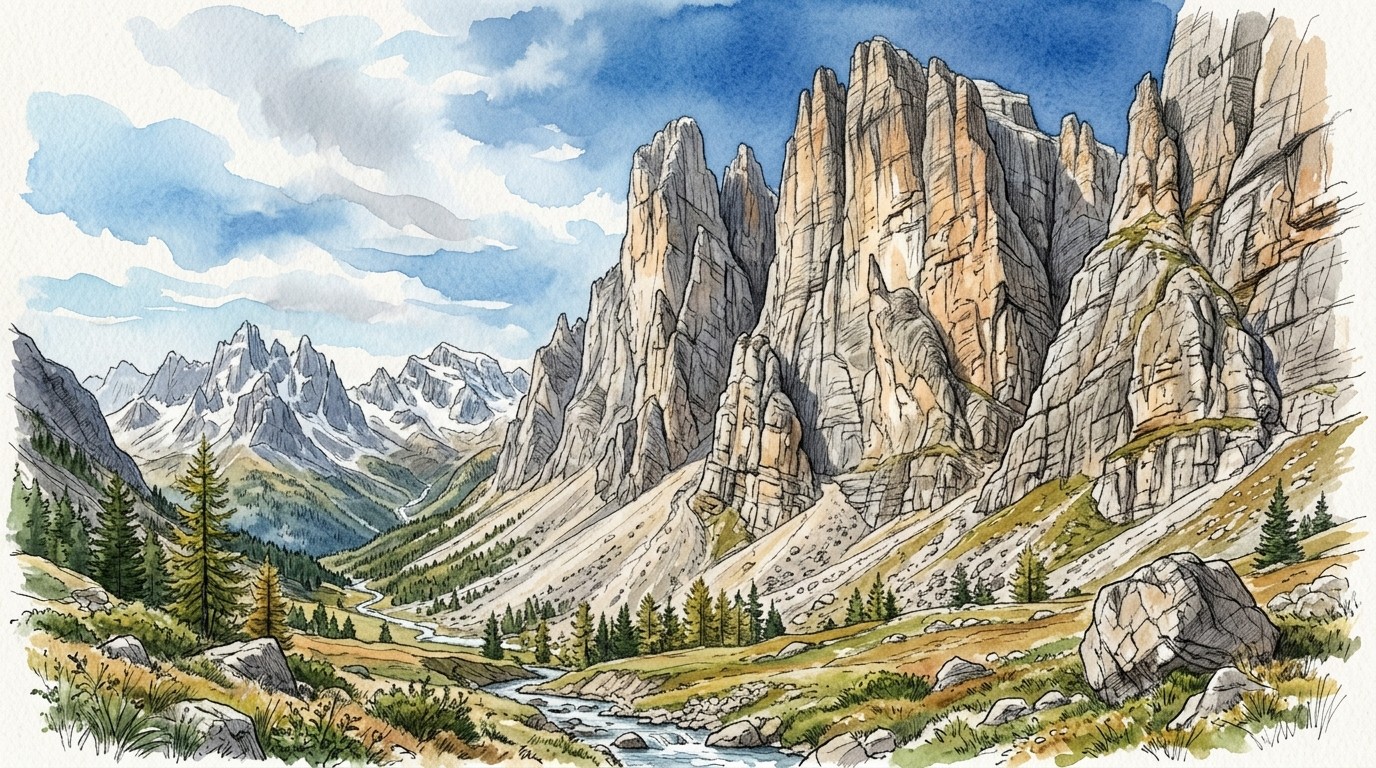
June to September. In our model run on 30 years of data from the Province of Bolzano's weather service, the big south face of Piz Ciavazes above the Passo Sella scores 63% green (climbable) afternoons in September, its best month, then July (61%), August (60%) and June (55%). October scores 51% but brings frozen nights and early snow, and May (40%) still has snow on the approaches and ledges in many years. From November to April the high faces are under snow.
September is often the most settled month: about 87mm of rain on nine days at the Sella, against about 133mm on 13 days in July. See the full table in Best Time to Climb in the Dolomites.
Summer storms are the main reason days are lost. July and August are the wettest months at the Sella, and much of the rain falls in afternoon thunderstorms. A storm can catch you high on a long route, so start early and plan to be off the wall, or near the top, by early afternoon on days with storms in the forecast. Sunny faces dry quickly once a storm has passed.
Our forecast scores the climbing window from 10:00 to 16:00 and marks any day with rain in the forecast red, so a day that shows red for an afternoon storm may still give a good morning. Check the hourly detail on each area's page.
Aspect matters enormously here. Sunny south faces such as Piz Ciavazes and the Marmolada south face dry fast and warm up early in the day. North faces such as the Cima Grande, the Sassolungo north face and the Civetta are much slower: they hold snow and meltwater into midsummer, seep after rain and stay cold. In our replay, the Sassolungo north face scores at most 44% even in September. Save the north walls for a long, settled spell in July to September.
When the high faces are wet or snowy, the lower valley crags such as Landro and Erto are the fallback.
Mountain huts and lifts run on their own seasonal timetables, and the dates change from year to year: the Marmolada cable cars, for example, ran from 29 June to 15 September in summer 2024. Check each hut's and lift's dates before you plan an approach around them, and check road and parking rules at the busiest trailheads.
Check the area comparison at the top of this page. It shows today's verdict for 11 areas, from Piz Ciavazes and Cinque Torri to the Tre Cime and the Marmolada, with the reason for any amber or red, and updates every four hours.
June to September. In our 30-year replay of Piz Ciavazes, September is the best month at 63% green afternoons, then July (61%), August (60%) and June (55%). September usually has the fewest rainy days of the summer months.
Start early and plan to be off the wall or near the top by early afternoon on days with storms forecast. Storms are most frequent in July and August. Check the hourly forecast for your area before you set off.
Yes. North faces such as the Cima Grande and the Sassolungo north face hold snow and meltwater into midsummer, seep after rain and stay cold. The Sassolungo north face scores at most 44% even in September in our replay.
Sometimes. October scores 51% green afternoons on the sunny Piz Ciavazes, but nights freeze and snow can arrive at any time. In May (40%) there is often still snow on approaches and ledges.